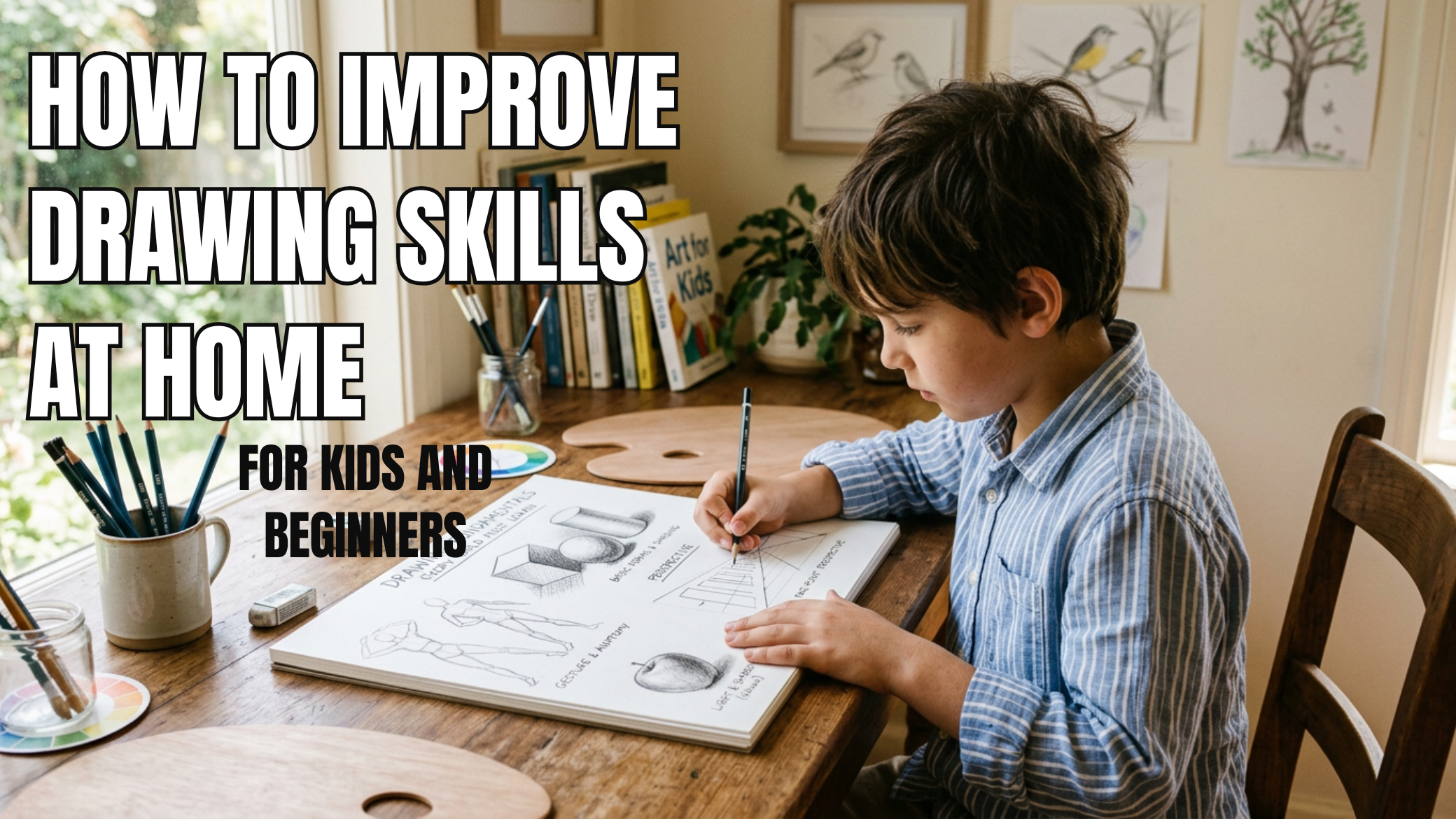
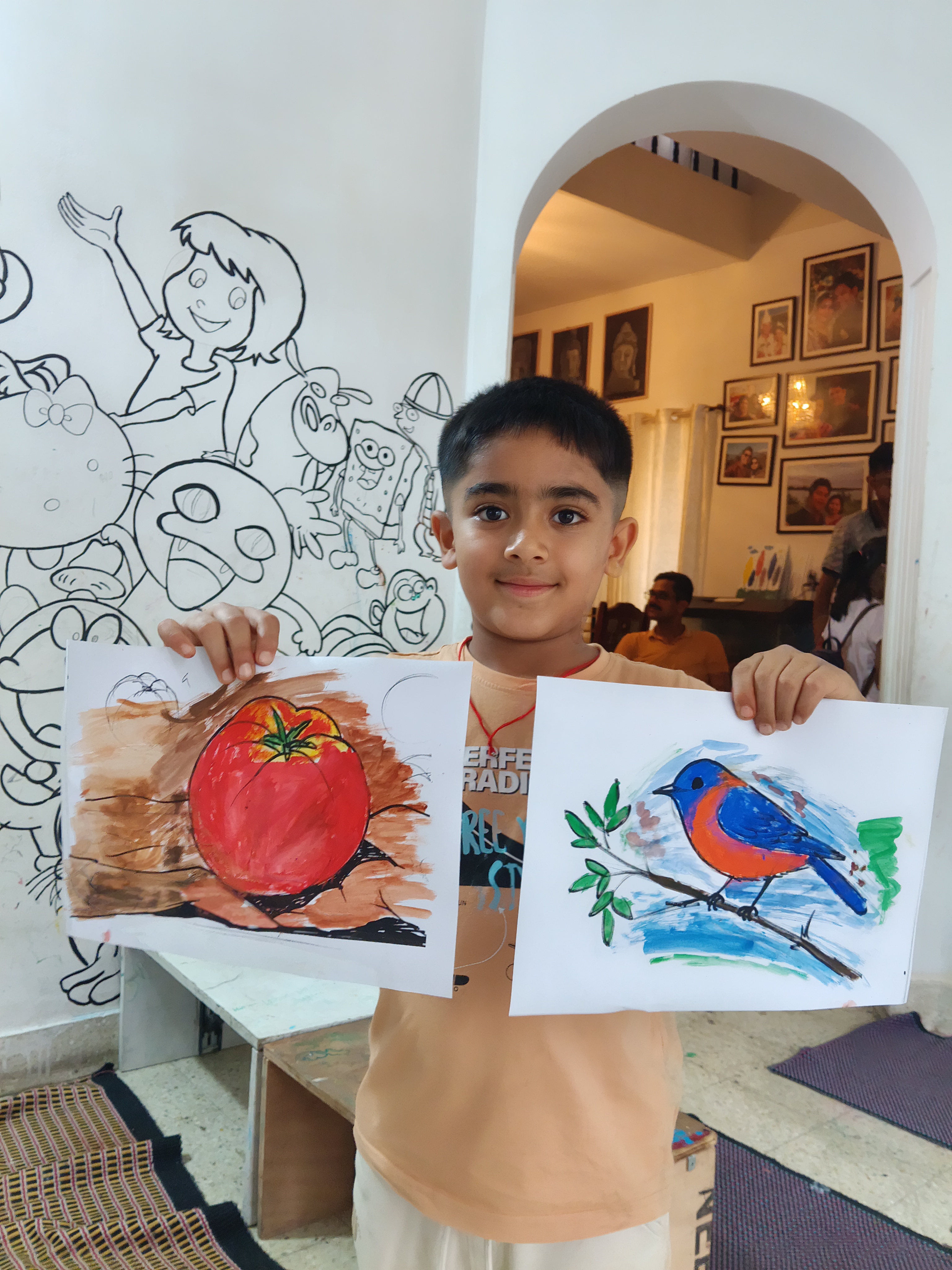
Many parents and beginners often ask one simple question:
“Can drawing really be improved at home?”
The honest answer is yes—absolutely.
You don’t need expensive materials, natural talent, or long hours of practice. What you really need is the right approach, patience, and gentle guidance. Drawing is not a gift you are born with; it is a skill that grows step by step, especially for kids.
This guide will help parents and beginners understand how to improve drawing skills at home in a simple, stress-free way.
________________________________________
Why Home Is Actually a Great Place to Learn Drawing
Home is where children feel most comfortable. There is no pressure, no comparison, and no fear of making mistakes.
Learning drawing at home helps because:
• Children feel relaxed and confident
• Practice can happen at their own pace
• Parents can encourage instead of judge
• Learning becomes enjoyable, not forced
When drawing feels fun, improvement happens naturally.
________________________________________
Who Can Improve Drawing Skills at Home?
Drawing at home works well for:
• Kids (4–12 years) who are exploring creativity
• Teenagers building basic art skills
• Absolute beginners with no drawing background
• Adults who want to learn drawing as a hobby
Age does not matter. Method matters.
________________________________________
Step 1: Begin with Very Simple Basics (This Is Crucial)
Many kids struggle because they jump straight into complex drawings.
Instead, start small:
• Straight and curved lines
• Circles, squares, and triangles
• Simple objects like balls, boxes, cups
These exercises train the hand and eye to work together.
This is where real drawing skill begins.
Parent tip: Praise effort, not perfection.
________________________________________
Step 2: Teach Children to Observe, Not Just Copy
A common mistake is asking children to copy pictures again and again.
Copying is okay at the beginning, but observation is what builds skill.
Encourage children to:
• Look carefully at real objects
• Notice shapes, sizes, and angles
• Draw what they actually see
For example, a ball is not just a circle—it has light and shadow.
________________________________________
Step 3: Keep Drawing Materials Simple
You do not need costly art supplies.
The best tools to start with:
• HB and 2B pencils
• Eraser
• Plain paper or sketchbook
Simple tools help children focus on skill, not distractions.
________________________________________
Step 4: Create a Small, Consistent Drawing Habit
Long practice sessions often lead to boredom.
Instead:
• 20–30 minutes a day
• 4–5 days a week
• One simple exercise at a time
Short, regular practice works far better than occasional long sessions.
________________________________________
Step 5: Introduce Light and Shadow Slowly
Shading makes a huge difference in drawing quality.
Start gently with:
• Light side and dark side
• Shading a simple circle
• Understanding where light comes from
Children feel proud when their drawings start looking “real.”
________________________________________
Step 6: Allow Creative Freedom Alongside Learning
Kids should never feel restricted.
Along with practice:
• Let them draw from imagination
• Encourage storytelling through pictures
• Allow free drawing time
Creativity keeps children emotionally connected to art.
________________________________________
Step 7: Common Mistakes Parents Should Avoid
Parents often want the best—but some actions slow progress:
• Comparing children with others
• Expecting quick results
• Correcting too much
• Turning drawing into pressure
Art grows with encouragement, not fear.
________________________________________
How Long Does It Take to See Improvement?
Every child is different, but generally:
• 1–2 months: Better focus and confidence
• 3–6 months: Clear improvement in drawings
• 1 year: Strong foundation and skill growth
Progress is slow—but very rewarding.
________________________________________
Should Kids Learn Digital Drawing at Home?
Digital drawing is exciting, but it should come after basic drawing skills.
Best order:
1. Pencil drawing
2. Observation and shading
3. Digital tools (for older kids)
This keeps learning healthy and balanced.
________________________________________
How Online Art Classes Help Home Practice
Home practice works best when supported by expert guidance.
Good online art classes provide:
• Clear learning structure
• Live interaction and feedback
• Motivation and discipline
• Correct technique from the start
This combination speeds up improvement significantly.
________________________________________
How Ankona School of Art Supports Kids and Beginners
At Ankona School of Art, learning is gentle, structured, and encouraging.
What parents appreciate:
• 25+ years of teaching experience
• Age-appropriate learning methods
• Strong drawing foundations
• Live online classes with personal feedback
• Students learning from India and abroad
The focus is not just drawing—it is confidence, creativity, and growth.
________________________________________
Final Thoughts for Parents and Beginners
To improve drawing skills at home:
• Start simple
• Practice regularly, not perfectly
• Encourage observation
• Be patient and positive
• Take guided help when needed
Art is more than a hobby. It builds focus, imagination, and self-belief.
________________________________________
Ready to Help Your Child Improve Drawing Skills?
If you want the right guidance along with home practice:
Join a Free Introductory Art Class
Get Personal Guidance for Kids or Beginners
Explore Online Art Courses at Ankona School of Art
________________________________________
Ankona School of Art
Helping young artists grow with confidence and care