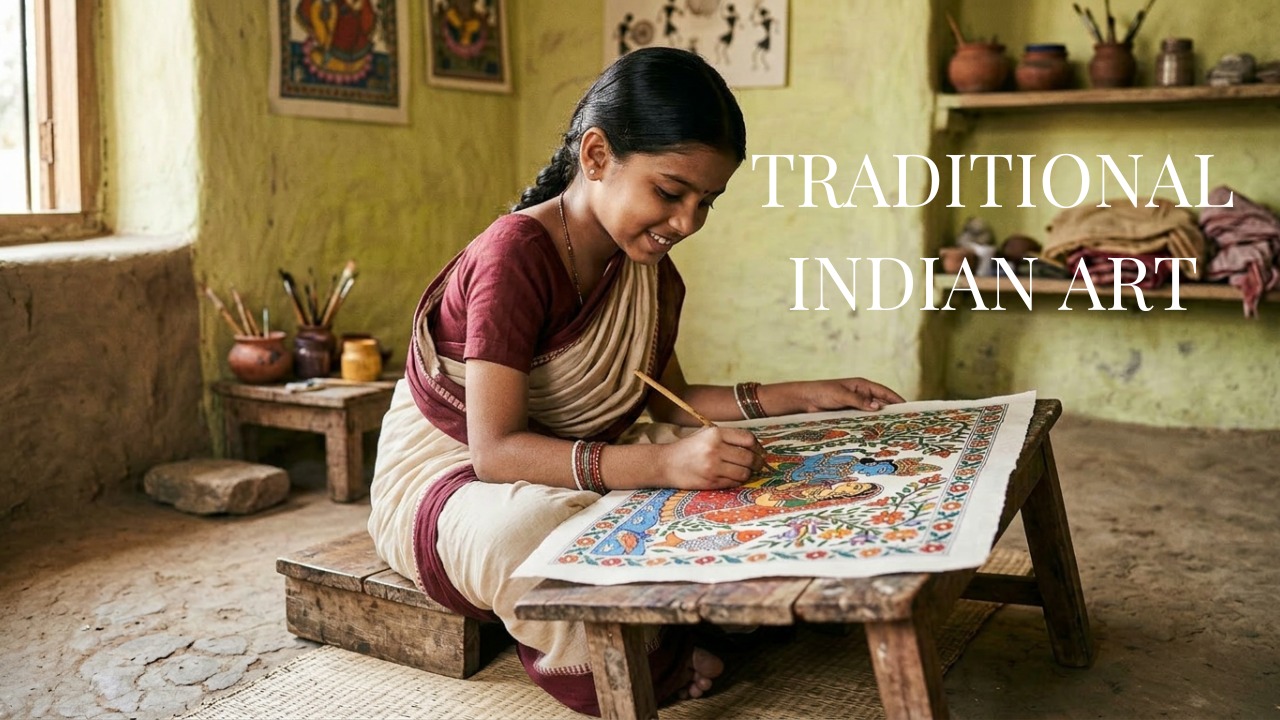
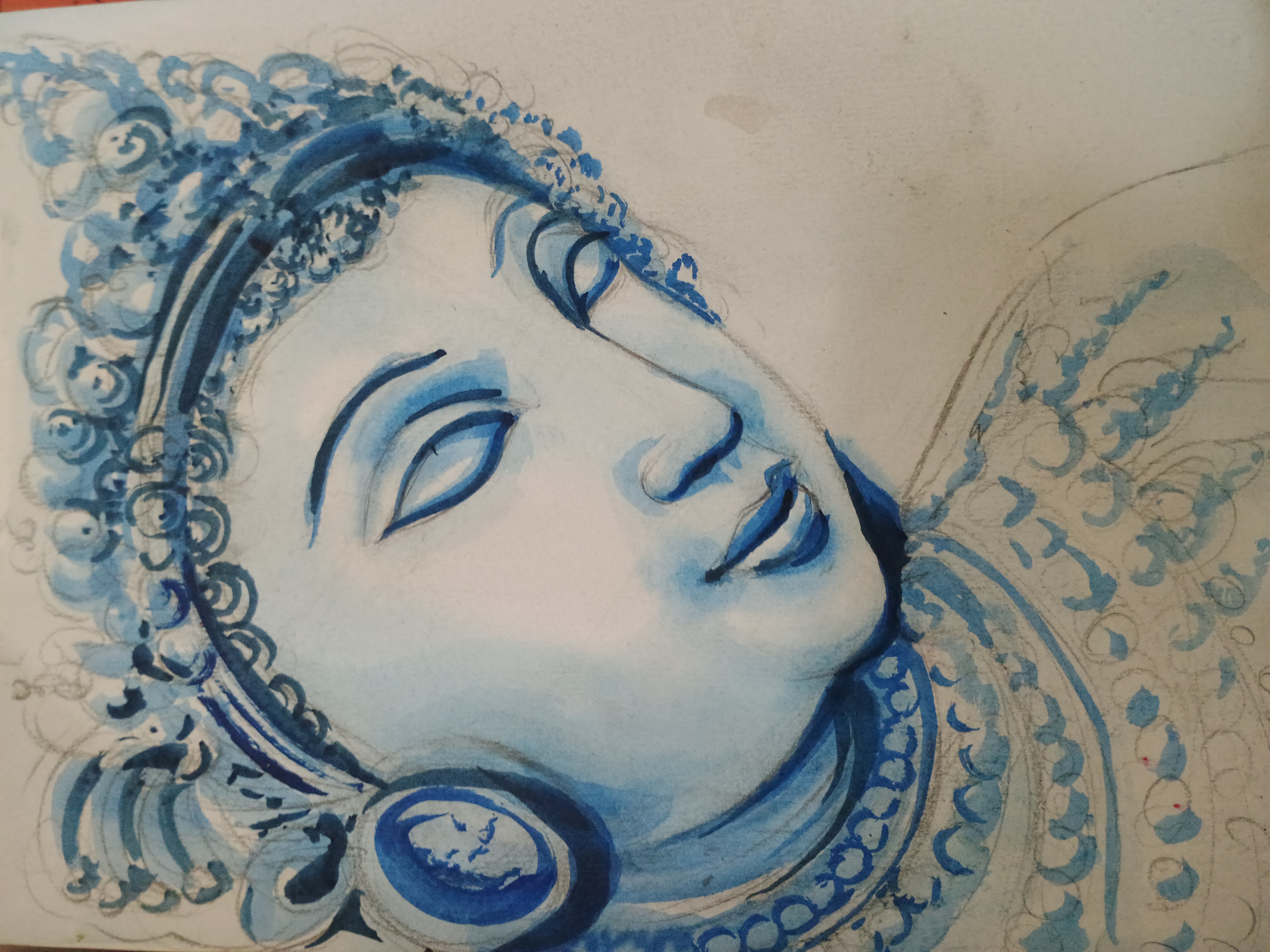
India is a land of stories, traditions, and deep artistic heritage. Long before modern art tools and digital platforms, Indian artists expressed culture, devotion, and daily life through traditional art forms passed down for generations.
In today’s fast, digital world, learning traditional Indian art is not just about creativity—it is about connecting with roots, slowing down, and understanding culture through art.
This blog introduces some of the most beautiful folk art forms of India that everyone should experience at least once.
________________________________________
Why Traditional Indian Art Is Still Relevant Today
Traditional art forms are more than decoration. They:
• Preserve cultural history
• Encourage patience and discipline
• Use natural, eco-friendly materials
• Connect art with storytelling and symbolism
Learning these art forms helps us appreciate India’s diversity and craftsmanship.
________________________________________
1. Tanjore Painting (Tamil Nadu)
Tanjore painting is one of the most respected classical Indian art forms.
Why Learn It:
• Uses gold foil and rich colors
• Focuses on devotional and cultural themes
• Builds detailing, patience, and precision
Tanjore art is ideal for those who love heritage, tradition, and fine craftsmanship.
________________________________________
2. Madhubani Painting (Bihar)
Madhubani painting is known for its bold lines and symbolic storytelling.
Why Learn It:
• No empty spaces—every inch tells a story
• Uses natural dyes and simple tools
• Encourages creativity and imagination
This art form is perfect for beginners and cultural art lovers.
________________________________________
3. Warli Art (Maharashtra)
Warli art is one of the oldest tribal art forms of India.
Why Learn It:
• Simple stick figures and geometric patterns
• Depicts daily village life
• Improves composition and rhythm
Warli teaches that simplicity can be powerful.
________________________________________
4. Lippan Art (Mud & Mirror Art – Gujarat)
Lippan art uses clay and mirrors to create stunning wall décor.
Why Learn It:
• Eco-friendly and textured art
• Perfect for modern home décor
• Calming, meditative process
Lippan art beautifully blends tradition with contemporary interiors.
________________________________________
5. Kalamkari Art (Andhra Pradesh & Telangana)
Kalamkari is a storytelling art form painted using a pen (kalam).
Why Learn It:
• Rich mythological and natural themes
• Improves line work and storytelling
• Teaches patience and planning
This art form is ideal for those who love detail and narrative art.
________________________________________
6. Gond Art (Madhya Pradesh)
Gond art uses dots and patterns to create vibrant stories.
Why Learn It:
• Strong connection with nature
• Builds pattern and color sense
• Encourages free-flow creativity
Gond art helps artists think beyond realism.
________________________________________
7. Pattachitra (Odisha & West Bengal)
Pattachitra is a detailed scroll painting tradition.
Why Learn It:
• Focuses on intricate line work
• Uses traditional natural pigments
• Teaches discipline and consistency
It’s perfect for artists who enjoy fine detailing.
________________________________________
Why Everyone Should Learn Traditional Indian Art at Least Once
Learning traditional art helps:
• Preserve cultural heritage
• Reduce stress through slow creativity
• Improve observation and focus
• Create meaningful handmade artwork
It’s not about becoming an expert—it’s about experiencing the process.
________________________________________
Traditional Art vs Modern Art – Not a Competition
Traditional art teaches:
• Patience
• Storytelling
• Cultural values
Modern art teaches:
• Experimentation
• Expression
• Innovation
Both are important—and traditional art often strengthens modern creativity.
________________________________________
How Ankona School of Art Keeps Traditional Art Alive
At Ankona School of Art, traditional Indian art forms are taught with authentic techniques and respect for heritage.
What Makes Ankona Different:
• 25+ years of teaching experience
• Traditional art workshops & courses
• Beginner-friendly step-by-step guidance
• Focus on cultural understanding, not copying
Students learn why an art form exists—not just how to make it.
________________________________________
Final Thoughts
Traditional Indian art is not old-fashioned—it is timeless.
In a world of fast trends, learning these art forms helps us reconnect with culture, creativity, and calmness.
________________________________________
Explore Traditional Art with Ankona School of Art
If you want to experience the beauty of Indian traditional art, start with guided learning.
- Join Traditional Art Workshops
- Explore Folk Art Courses
- Learn from Experienced Mentors at Ankona School of Art
________________________________________
Ankona School of Art
Preserving India’s artistic heritage through learning