India is a land of rich culture, heritage, and artistic traditions. Traditional Indian art reflects the history, beliefs, and creativity of different regions of the country. From intricate paintings to beautiful folk crafts, Indian art forms have been passed down through generations and continue to inspire artists around the world.
Today, learning traditional Indian art is not just about preserving culture—it is also about developing creativity, patience, and artistic skills.
________________________________________
What Is Traditional Indian Art?
Traditional Indian art includes a wide variety of painting styles and craft forms that originated in different parts of India. These art forms are deeply connected with festivals, rituals, and daily life.
Some of the most popular traditional Indian art forms include:
• Madhubani painting
• Warli art
• Tanjore painting
• Pattachitra
• Kalamkari
• Lippan art
• Gond art
Each art form has its own unique patterns, colors, and storytelling style.
________________________________________
Why Traditional Indian Art Is Important Today
In a fast digital world, traditional art keeps us connected to our roots. Learning Indian art forms helps both children and adults understand cultural heritage while developing creative skills.
Key Benefits of Learning Traditional Indian Art
1. Connects with Indian Culture
Traditional art reflects mythology, nature, and history. Learning these styles helps artists appreciate India’s cultural richness.
2. Improves Patience and Concentration
Most traditional art forms involve detailed patterns and repetitive designs, which improve focus and calm the mind.
3. Boosts Creativity
Artists learn to use colors, patterns, and storytelling techniques in unique ways.
4. Enhances Fine Motor Skills
Detailed hand movements improve control and coordination, especially for children.
5. Provides Relaxation and Stress Relief
Traditional art is often meditative and soothing, making it a perfect creative escape.
________________________________________
Popular Traditional Indian Art Forms to Learn
Madhubani Painting
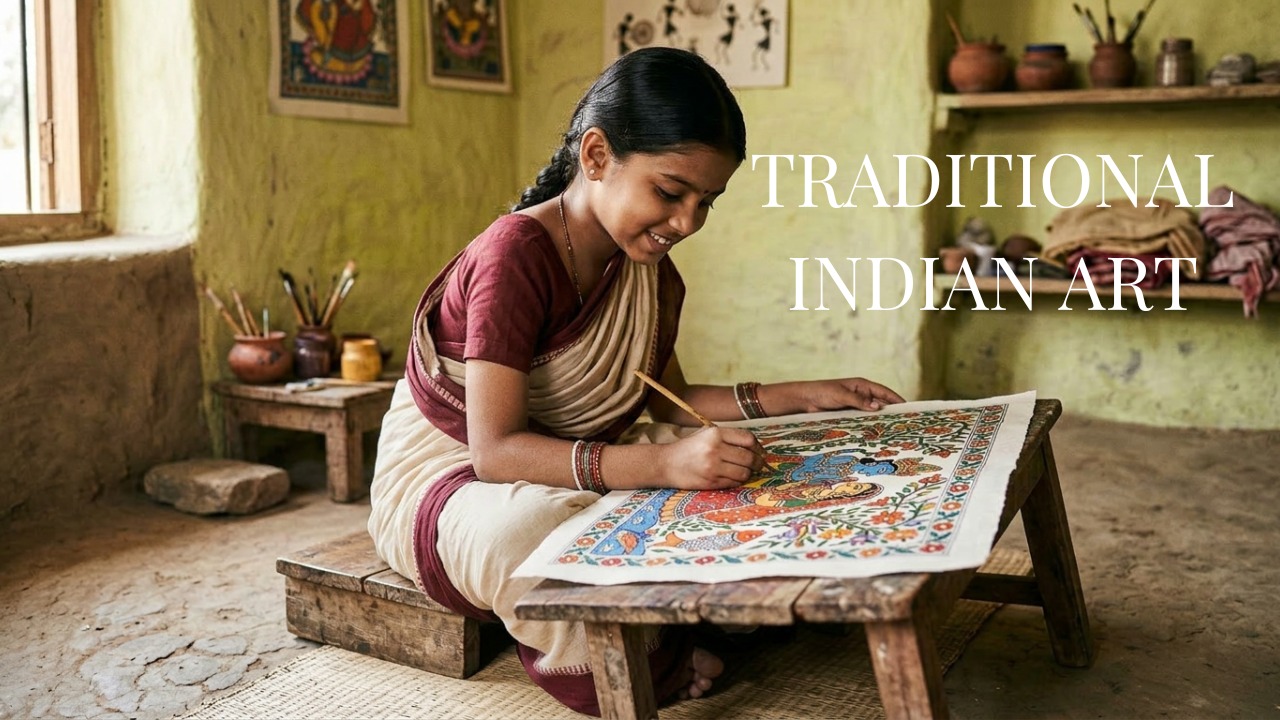
Originating from Bihar, this art uses bold lines and bright colors to depict nature, mythology, and cultural themes.
Warli Art
A tribal art form from Maharashtra, Warli uses simple geometric shapes to tell stories of village life and nature.
Tanjore Painting
A classical South Indian art style known for its rich colors, gold foil work, and divine themes.
Lippan Art
A traditional mud and mirror work from Gujarat used for decorative wall art.
Gond Art
A vibrant tribal art form with intricate patterns and nature-inspired designs.
________________________________________
Who Can Learn Traditional Indian Art?
Traditional art is suitable for:
• Kids and students
• Beginners and hobby artists
• Adults seeking relaxation
• Professional artists exploring new styles
No prior experience is required. With proper guidance, anyone can start learning these beautiful art forms.
________________________________________
Traditional Art as a Creative Hobby and Career
Traditional Indian art can be more than just a hobby. Many artists today:
• Sell handmade artworks
• Conduct workshops
• Create home décor products
• Showcase art online
• Teach traditional art to others
This makes it both a creative and rewarding skill.
________________________________________
How to Start Learning Traditional Indian Art
Beginners should:
• Start with simple designs and patterns
• Practice regularly
• Learn about the history of each art form
• Take guidance from experienced teachers
Structured learning helps build strong skills and confidence.
________________________________________
Final Thoughts
Traditional Indian art is a beautiful blend of culture, creativity, and expression. Learning these timeless art forms helps preserve heritage while nurturing imagination and artistic growth.
Whether you are a child, student, or adult beginner, exploring traditional Indian art can be a deeply enriching and joyful experience that connects you with India’s artistic legacy.