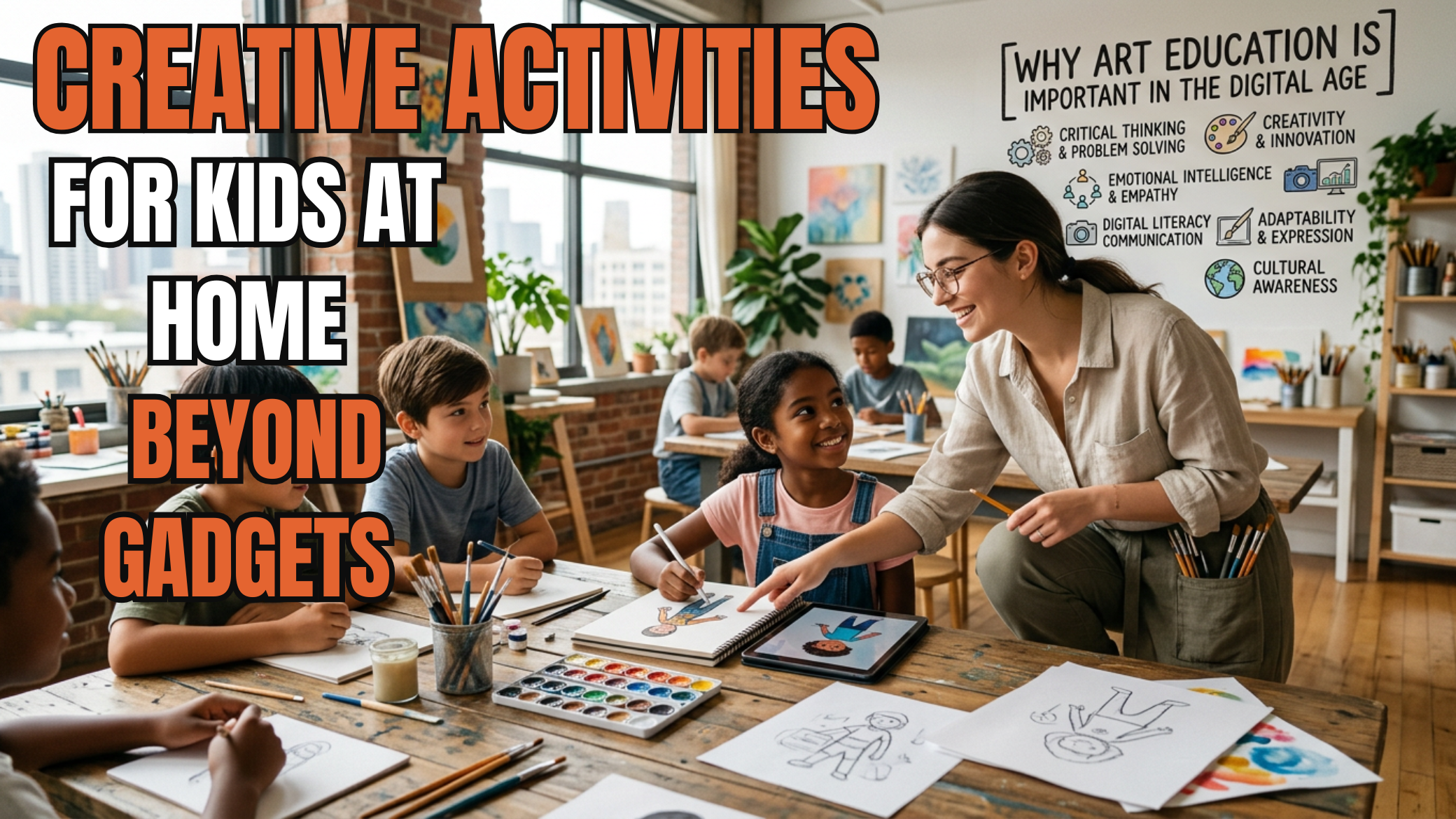
These days, almost every parent has the same concern:
“My child spends too much time on mobile or TV. What else can I give them?”
You are not alone. Screens are everywhere, and while technology has its place, children also need activities that build imagination, focus, and confidence—not just entertainment.
The good news is that there are many simple, creative activities your child can do at home that are far more valuable than endless screen time.
This guide will help you discover the best creative activities for kids at home, suitable for different ages, using simple materials, and most importantly—without pressure.
________________________________________
Why Creative Activities Matter More Than Screen Time
Mobile games and TV provide instant excitement, but they do not:
• Build patience
• Improve thinking skills
• Encourage self-expression
• Develop creativity
Creative activities, on the other hand:
• Help children think independently
• Improve concentration
• Build emotional balance
• Boost confidence
Children who engage in creative work are often calmer, happier, and more focused.
________________________________________
1. Drawing and Coloring (The Most Powerful Creative Habit)
Drawing is one of the best activities for children of all ages.
Why it works:
• No rules, no pressure
• Improves hand–eye coordination
• Helps children express feelings
• Builds imagination naturally
You only need:
• Pencil
• Paper
• Crayons or colors
???? Tip for parents: Let children draw freely. Avoid correcting every mistake.
________________________________________
2. Story Drawing (Drawing + Imagination)
Ask your child to:
• Draw a character
• Create a small story
• Draw the beginning, middle, and end
This activity:
• Improves thinking skills
• Boosts storytelling ability
• Builds creativity and logic together
Kids love this because it feels like play, not learning.
________________________________________
3. DIY Art & Craft with Home Materials
You don’t need fancy supplies.
Use:
• Old newspapers
• Cardboard boxes
• Paper cups
• Bottle caps
Activities like:
• Making animals
• Simple models
• Decorative items
These teach:
• Problem-solving
• Patience
• Resourcefulness
________________________________________
4. Clay Modeling or Paper Sculpting
Clay and paper modeling are excellent for:
• Finger strength
• Focus
• 3D thinking
Children enjoy shaping objects because they can touch and feel their creativity.
Even homemade dough works perfectly.
________________________________________
5. Creative Writing for Kids (Very Simple)
For kids who enjoy words:
• Write a short story
• Create a comic strip
• Describe their drawing in words
This helps:
• Language development
• Imagination
• Confidence in expression
Younger kids can tell stories verbally while parents write.
________________________________________
6. Music, Rhythm & Movement Activities
Creativity is not only visual.
Encourage:
• Singing
• Simple instruments
• Clapping rhythms
• Dancing freely
Music helps children:
• Release stress
• Improve memory
• Feel emotionally balanced
________________________________________
7. Role Play & Pretend Games
Role play is powerful.
Children can pretend to be:
• A teacher
• An artist
• A shopkeeper
• A storyteller
This builds:
• Social skills
• Emotional understanding
• Confidence
And yes—it is far better than watching cartoons.
________________________________________
8. Guided Art Activities (With Structure)
Free creativity is important, but children also need guided learning.
Structured art activities help children:
• Learn step by step
• Improve skills gradually
• Stay motivated
This is where art classes or guided sessions make a big difference.
________________________________________
Common Mistakes Parents Should Avoid
Many parents unintentionally reduce creativity by:
• Comparing children with others
• Expecting perfect results
• Forcing daily long activities
• Treating creativity like homework
Creative growth needs encouragement, not pressure.
________________________________________
How Much Time Is Enough for Creative Activities?
You don’t need hours.
Ideal routine:
• 30–60 minutes a day
• Consistent but flexible
• Balance between free play and guided activity
Even short daily creative time has a huge impact.
________________________________________
How Art Helps Children Beyond Creativity
Regular creative activities help children:
• Focus better in studies
• Reduce anxiety
• Improve confidence
• Express emotions safely
Art supports mental and emotional development, not just skills.
________________________________________
How Ankona School of Art Supports Creative Growth
At Ankona School of Art, children are encouraged to explore creativity in a safe, structured, and joyful way.
What parents love:
• 25+ years of teaching experience
• Age-appropriate learning
• Focus on creativity + fundamentals
• Live online classes with personal attention
• Students learning from India and abroad
The goal is not to push children—but to help them grow naturally.
________________________________________
Final Thoughts for Parents
Reducing mobile and TV time does not mean forcing study.
It means:
• Offering better alternatives
• Encouraging creativity
• Being patient and supportive
Creative activities help children discover themselves.
________________________________________
Help Your Child Explore Creativity the Right Way
If you want guided creative learning along with fun:
Join a Free Introductory Art Class for Kids
Get Personal Guidance for Parents
Explore Online Art Courses at Ankona School of Art
________________________________________
Ankona School of Art
Helping children grow creatively—beyond screens