Before picking up a brush, beginners should understand one key rule:
In watercolor, water control is more important than color.
Unlike acrylic or oil painting, watercolor is transparent and layered. Mistakes cannot always be covered, which is why learning basics is essential.
________________________________________
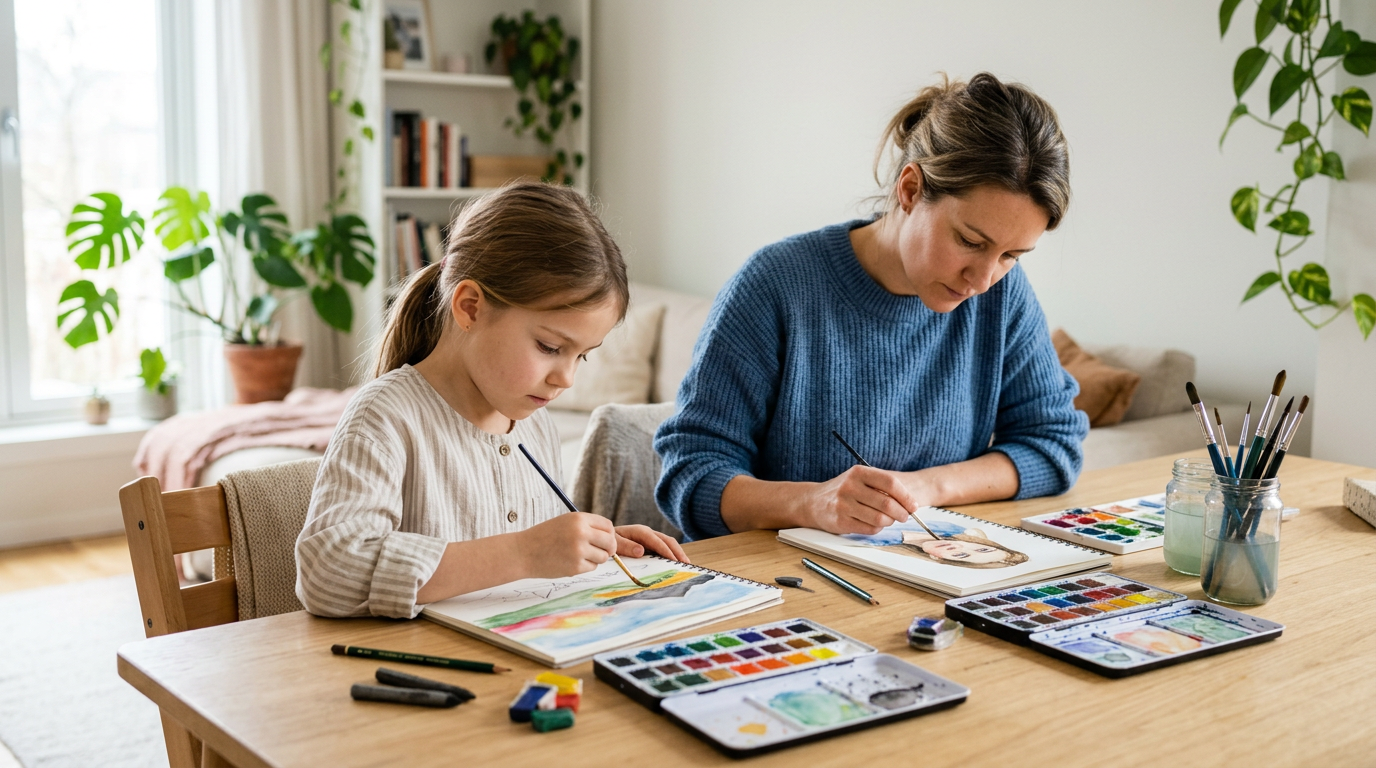
Essential Materials for Watercolor Painting Beginners
You don’t need expensive supplies to start. Use simple, beginner-friendly materials.
1. Watercolor Paper (Most Important)
Always use watercolor paper, not regular drawing paper.
• Recommended: 200–300 GSM
• Texture: Cold-pressed (best for beginners)
Good paper prevents buckling and helps colors blend smoothly.
________________________________________
2. Watercolor Paints
Beginners can start with:
• Student-grade watercolor cakes or tubes
• Basic color set (12 colors is enough)
Focus on learning color mixing instead of buying many colors.
________________________________________
3. Brushes
You only need 2–3 brushes:
• One round brush (medium size)
• One smaller brush for details
Soft bristles hold water better and give smooth strokes.
________________________________________
4. Other Basic Tools
• Palette for mixing
• Clean water (2 containers if possible)
• Tissue or cloth
• Pencil and eraser (light sketching)
________________________________________
Basic Watercolor Techniques for Beginners
Learning techniques step by step builds confidence.
________________________________________
1. Flat Wash
This is the foundation of watercolor painting.
• Even layer of color
• Used for skies, backgrounds, and large areas
Learning flat wash improves brush control.
________________________________________
2. Graded Wash
A smooth transition from dark to light.
• Essential for skies, water, and soft backgrounds
• Teaches water and pigment balance
________________________________________
3. Wet-on-Wet Technique
Paint applied on wet paper.
• Creates soft, flowing effects
• Perfect for clouds, flowers, and abstract backgrounds
________________________________________
4. Wet-on-Dry Technique
Paint applied on dry paper.
• Gives sharp edges and control
• Used for details, buildings, and foreground elements
________________________________________
5. Dry Brush Technique
Minimal water, more pigment.
• Used for textures like trees, grass, or rough surfaces
________________________________________
Simple Subjects Beginners Should Start With
Avoid complex subjects in the beginning.
Start with:
• Color charts
• Skies and clouds
• Leaves and simple flowers
• Landscapes with basic shapes
Simple practice builds strong confidence.
________________________________________
Common Watercolor Mistakes Beginners Make
Avoid these common problems:
- Using too much water
- Painting on normal paper
- Overworking the same area
- Expecting instant perfection
- Comparing with advanced artists
Watercolor requires patience. Progress comes with consistency.
________________________________________
How Often Should Beginners Practice?
• 20–30 minutes a day is enough
• Focus on techniques, not finished paintings
• Short, regular practice works better than long, irregular sessions
________________________________________
Why Learning Watercolor with Guidance Helps
Many beginners quit watercolor because:
• They learn randomly from videos
• They don’t understand why mistakes happen
A structured course helps beginners:
• Learn techniques in the right order
• Understand water control clearly
• Get feedback and correction
________________________________________
How Ankona School of Art Teaches Watercolor Painting
At Ankona School of Art, watercolor is taught with strong fundamentals and step-by-step guidance.
What Makes Ankona Different:
• 25+ years of teaching experience
• Beginner-friendly structured lessons
• Focus on technique, not shortcuts
• Calm and encouraging learning environment
• Suitable for kids, teens, and adults
Students learn watercolor with clarity and confidence.
________________________________________
Final Thoughts for Beginners
Watercolor painting is not about controlling everything—it’s about understanding the flow.
With the right materials, techniques, and guidance, watercolor becomes a joyful and relaxing creative practice.
________________________________________
Start Your Watercolor Journey the Right Way
If you want to learn watercolor painting without confusion, start with the right foundation.
- Join a Beginner Watercolor Painting Workshop
- Get Personal Guidance from Expert Mentors
- Explore Art Courses at Ankona School of Art
________________________________________
Ankona School of Art
Teaching watercolor the right way, from the beginning