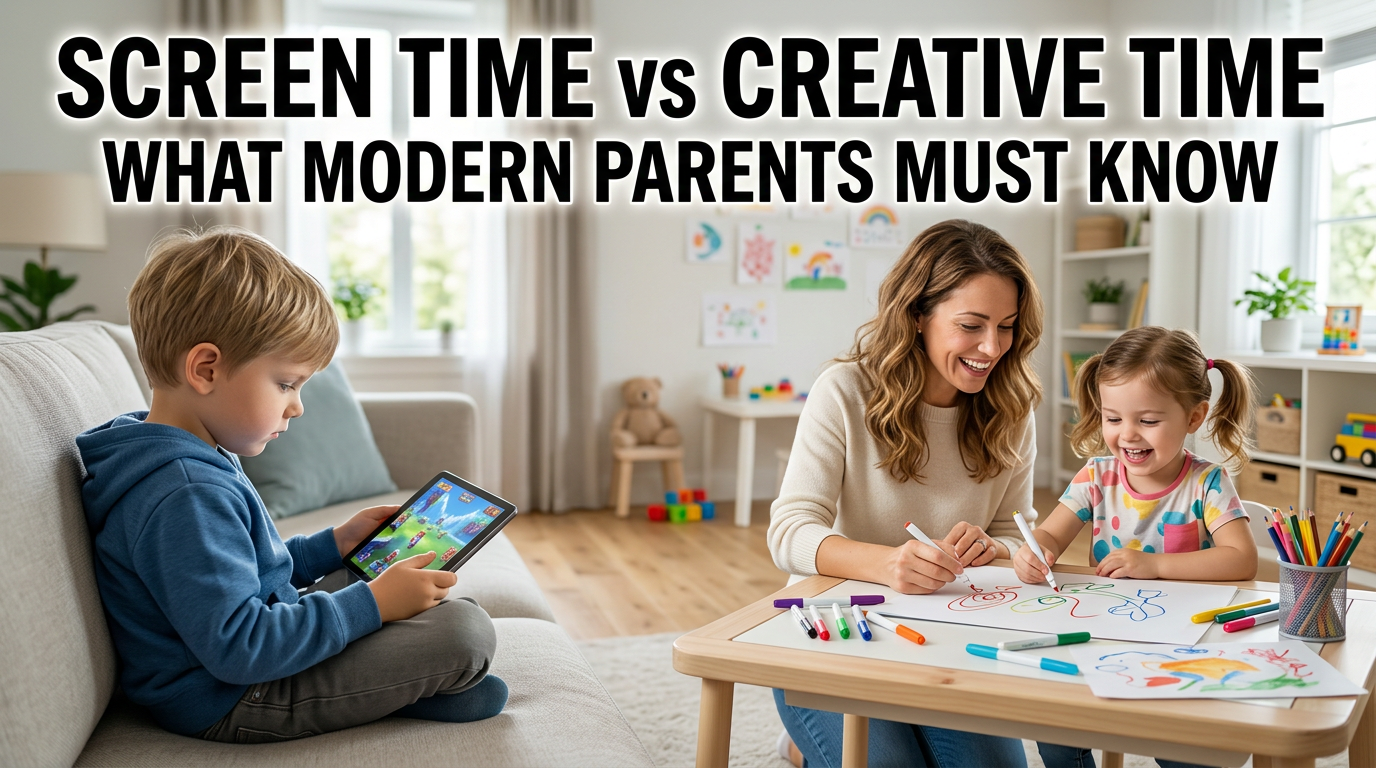
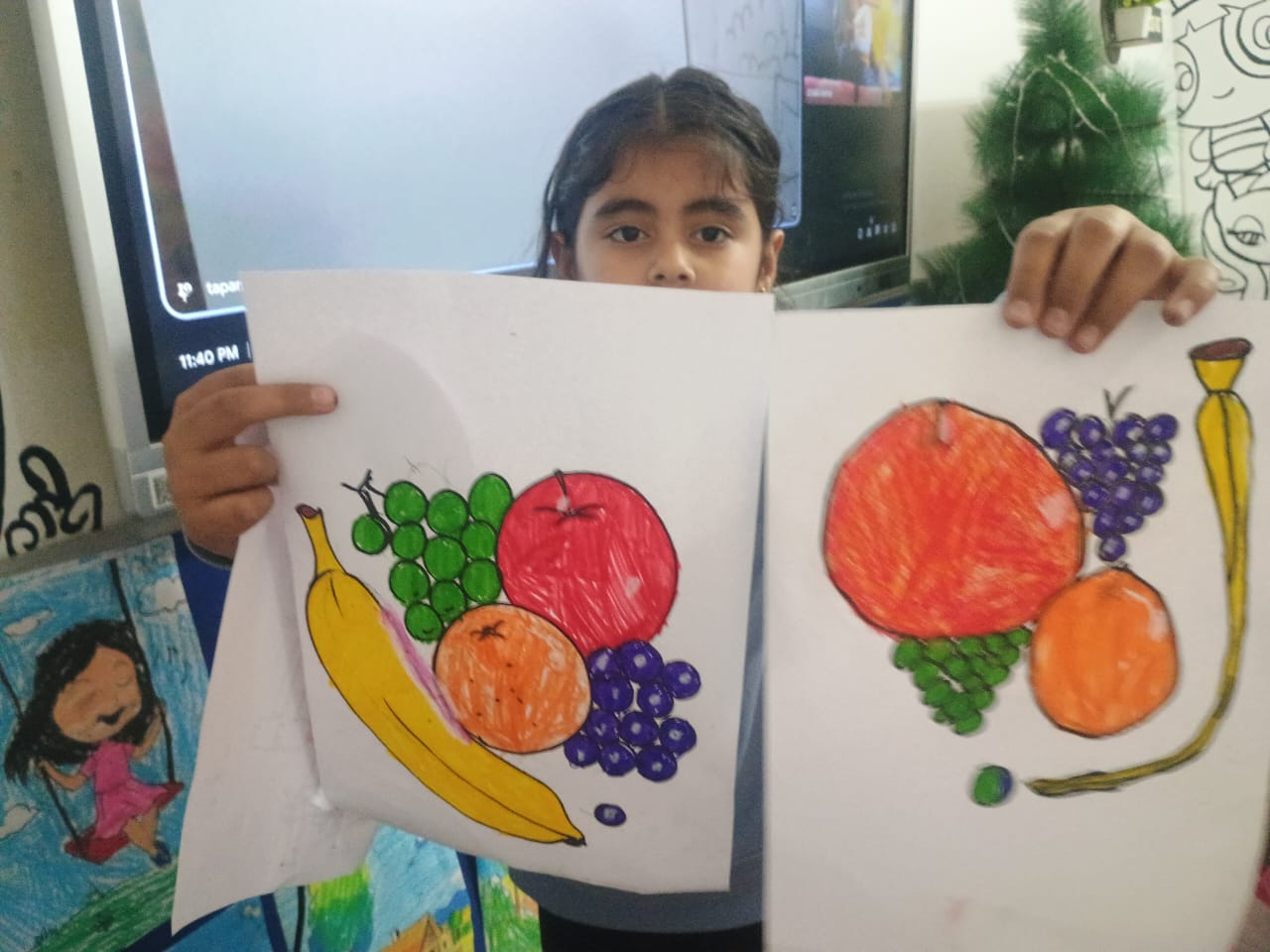
In today’s digital world, screens are everywhere. From online classes to entertainment apps, children are spending more time on mobile phones, tablets, and television than ever before. While technology offers learning opportunities, excessive screen time for kids can impact attention span, creativity, and emotional development.
As parents, the real question is not “Should we allow screens?” but rather “How much is too much?” and “What is replacing creative growth?”
Let’s understand the difference between screen time and creative time — and why balance matters.
The Reality of Screen Time
Screens are engaging because they provide instant stimulation — bright colors, fast movement, and constant entertainment. However, prolonged screen exposure can lead to:
- Reduced attention span
- Lower patience levels
- Sleep disturbances
- Decreased physical activity
- Dependency on instant rewards
- Studies show that excessive screen time may reduce a child’s ability to focus on long-term tasks like homework, reading, or problem-solving.
Digital learning is useful — but passive scrolling and gaming for hours can affect a child’s brain development and emotional regulation.
The Power of Creative Time
Creative time includes activities like:
- Drawing and painting
- Craft making
- Storytelling
- Music and dance
- Building and designing
Unlike screen time, creative activities require active thinking. Children imagine, plan, experiment, and solve problems. This stimulates brain development in a much deeper way.
When a child paints or draws, they:
✔ Improve concentration
✔ Develop patience
✔ Strengthen fine motor skills
✔ Enhance problem-solving ability
✔ Build emotional expression
Creative engagement gives children a sense of achievement that scrolling cannot provide.
Brain Development: Passive vs Active Learning
Screen-based entertainment is often passive. The child consumes information without much effort.
Creative activities are active. The child creates something new.
Active learning improves:
- Memory retention
- Cognitive flexibility
- Academic performance
- Emotional intelligence
That is why many educators recommend structured creative programs alongside academics.
⚖️ Finding the Right Balance
Completely banning screens may not be realistic in modern life. Instead, parents can focus on healthy balance:
Practical Tips for Parents:
- Set daily screen time limits.
- Create “No Screen” hours before bedtime.
- Encourage at least 1 hour of creative activity daily.
- Replace weekend screen marathons with art sessions.
- Participate in creative activities together as a family.
When children experience the joy of creating, they naturally reduce dependency on screens.
Why Structured Creative Programs Help
Random creative play is good — but structured art education offers long-term benefits.
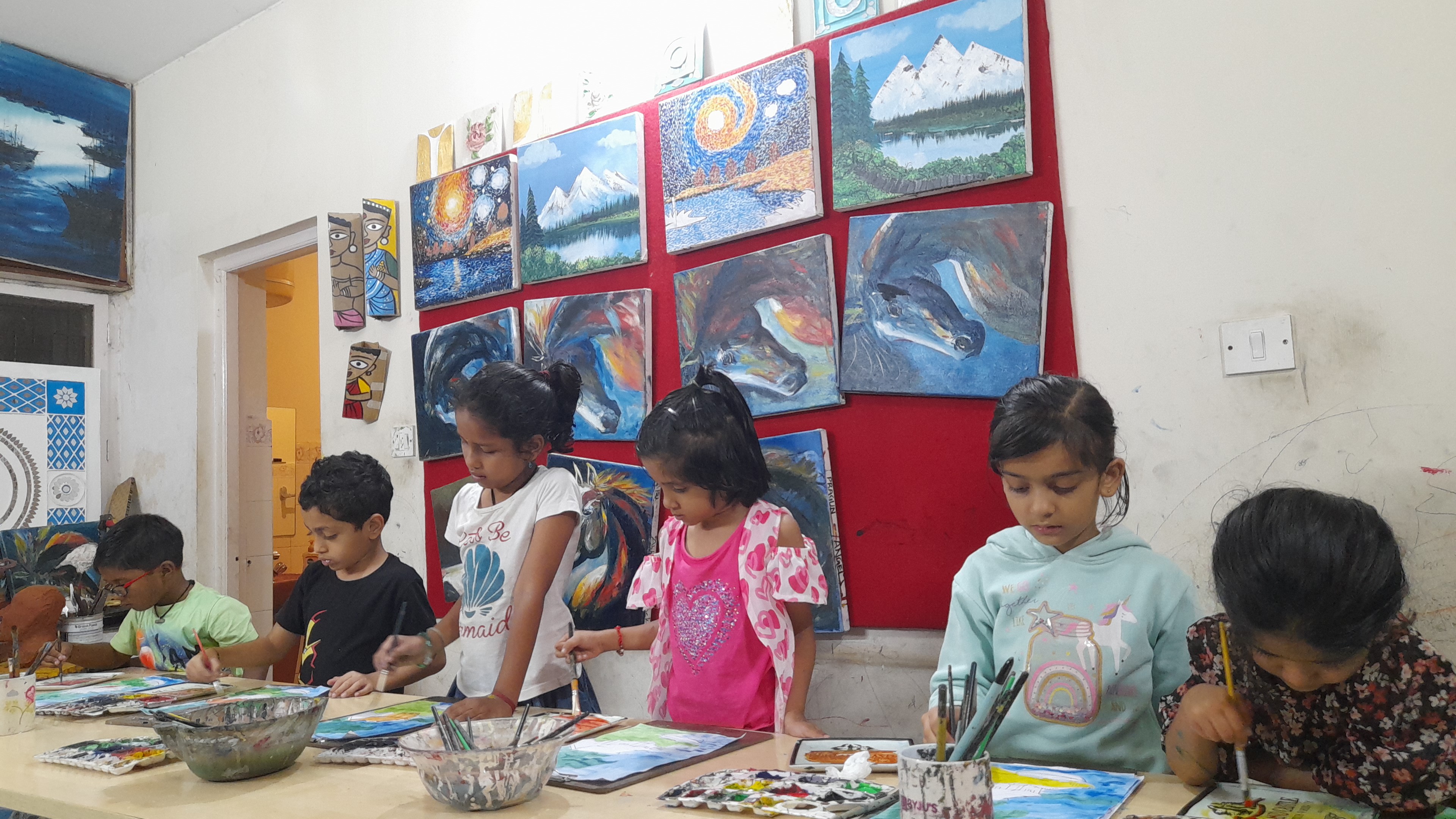
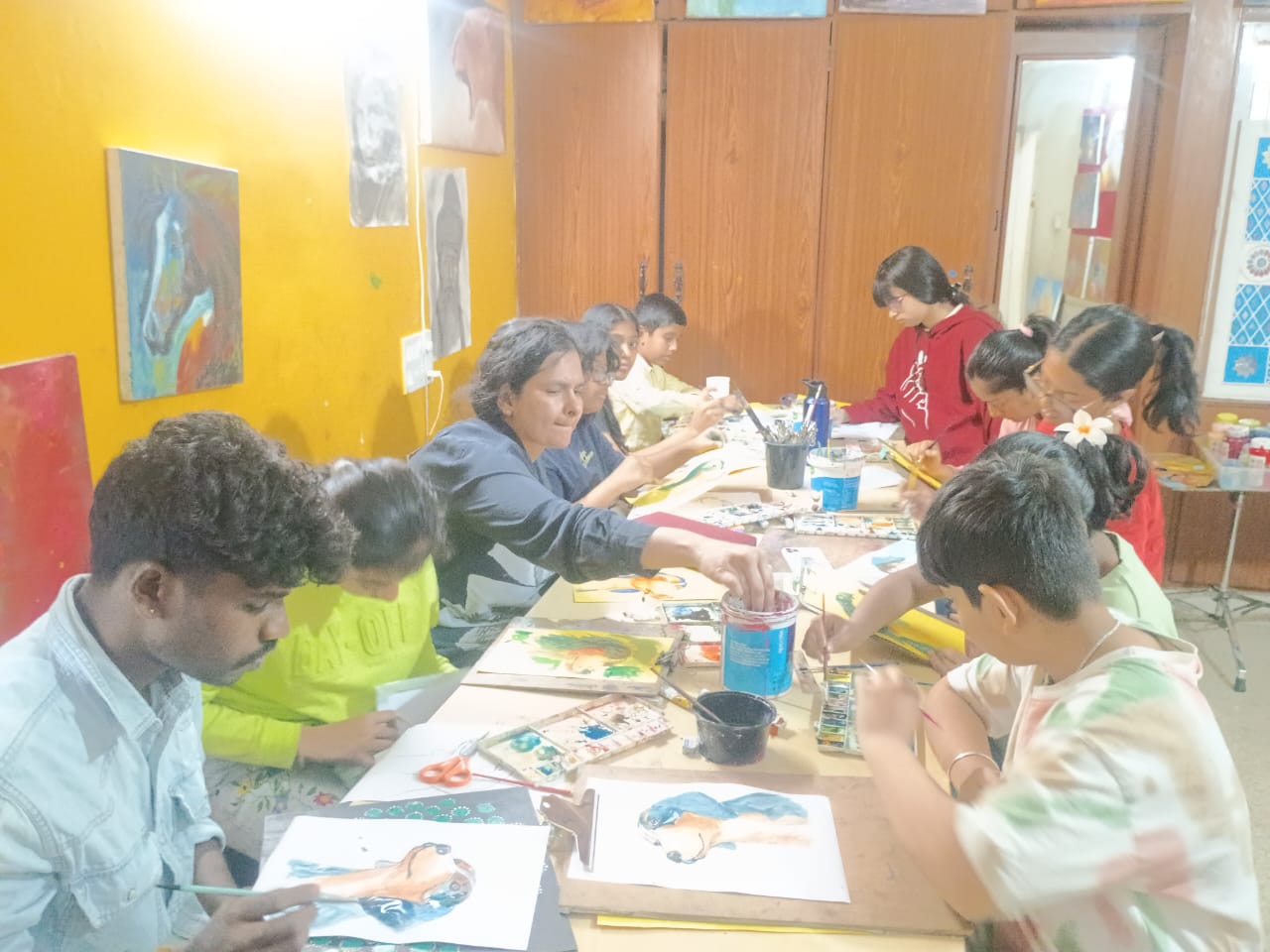
At Ankona School of Art, children engage in guided drawing and painting programs that nurture:
- Discipline
- Observation skills
- Confidence
- Independent thinking
- Creative time becomes purposeful development time.
Final Thought for Modern Parents
Technology is part of our future. But creativity shapes how children use that technology.
The goal is not to eliminate screens — it is to ensure screens do not replace imagination.
When children spend more time creating than consuming, they grow into focused, confident, and capable individuals.
Give your child the gift of creative balance.
✨ Ankona School of Art
Structured Drawing & Painting Classes
Online & Offline Programs Available
Admissions Open — Book a Demo Today