Education has changed dramatically in recent years. With digital platforms growing rapidly and traditional classrooms evolving, parents often ask Should my child learn art online or attend offline art classes?
In 2026, the answer is no longer simple. Both learning modes offer powerful advantages depending on a child’s personality, schedule, and learning goals.
Let’s understand the real difference.
What Are Offline Art Classes?
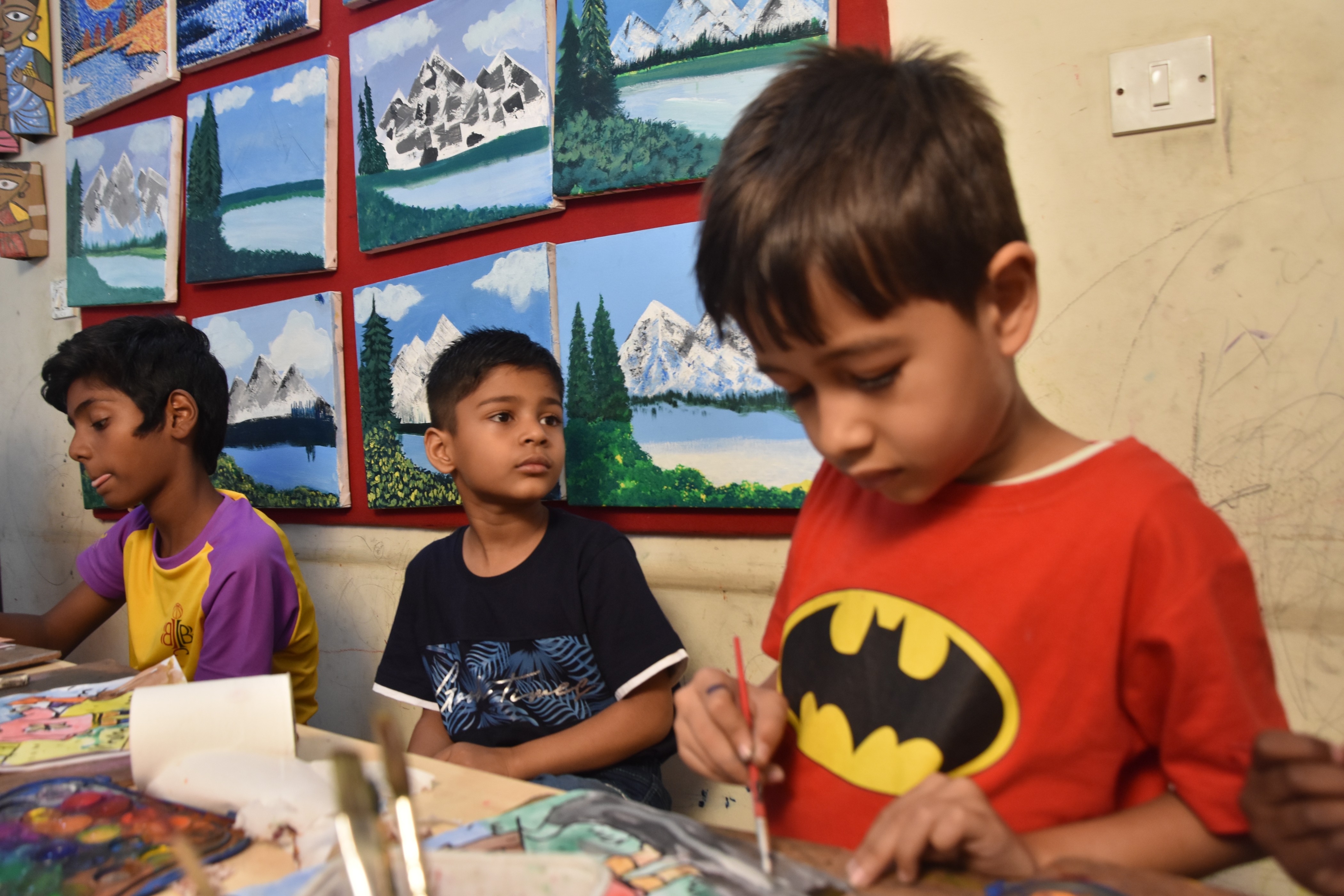
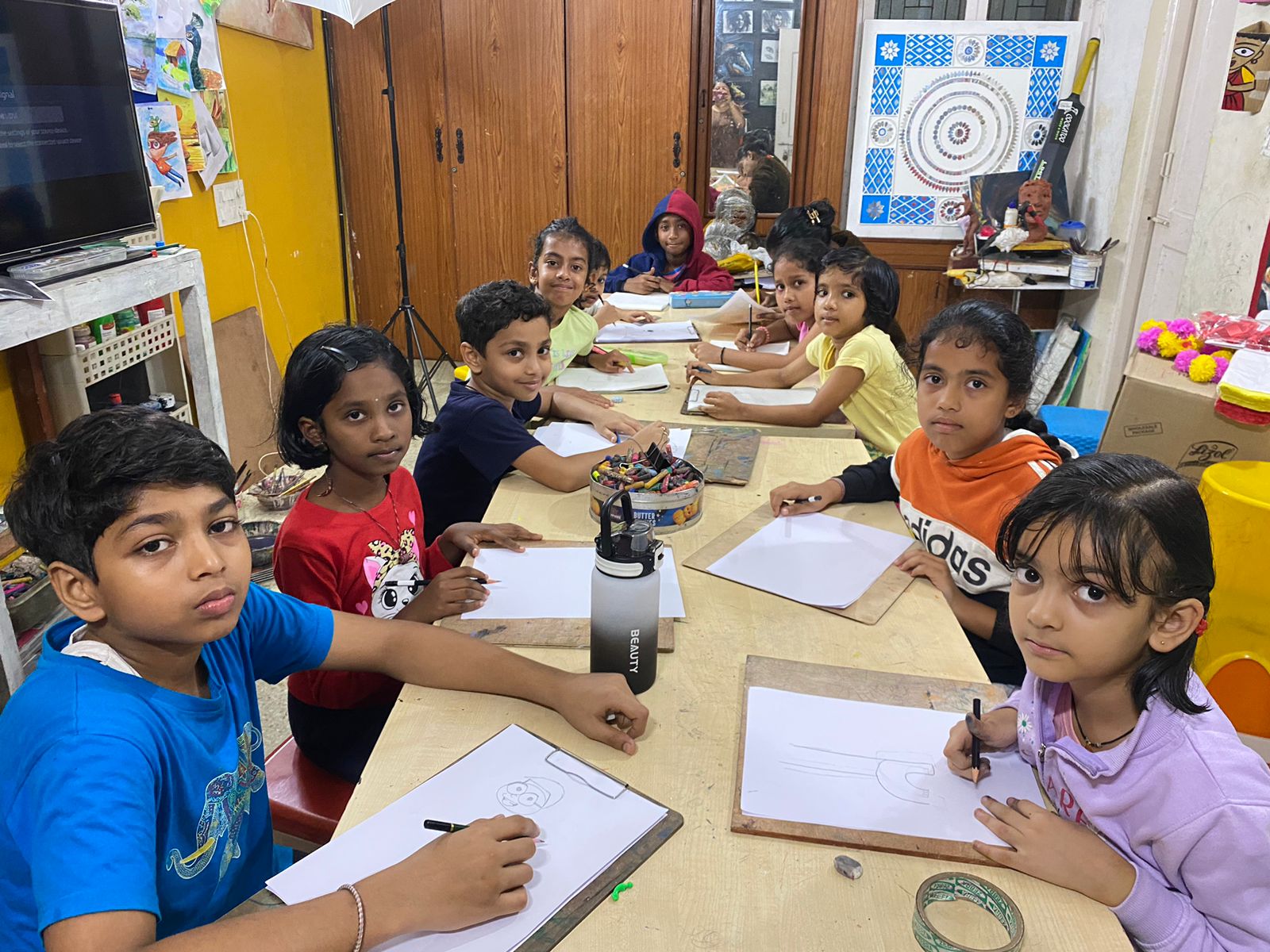
Offline art classes are traditional face-to-face learning environments where students physically attend a studio or art school.
Advantages of Offline Art Classes
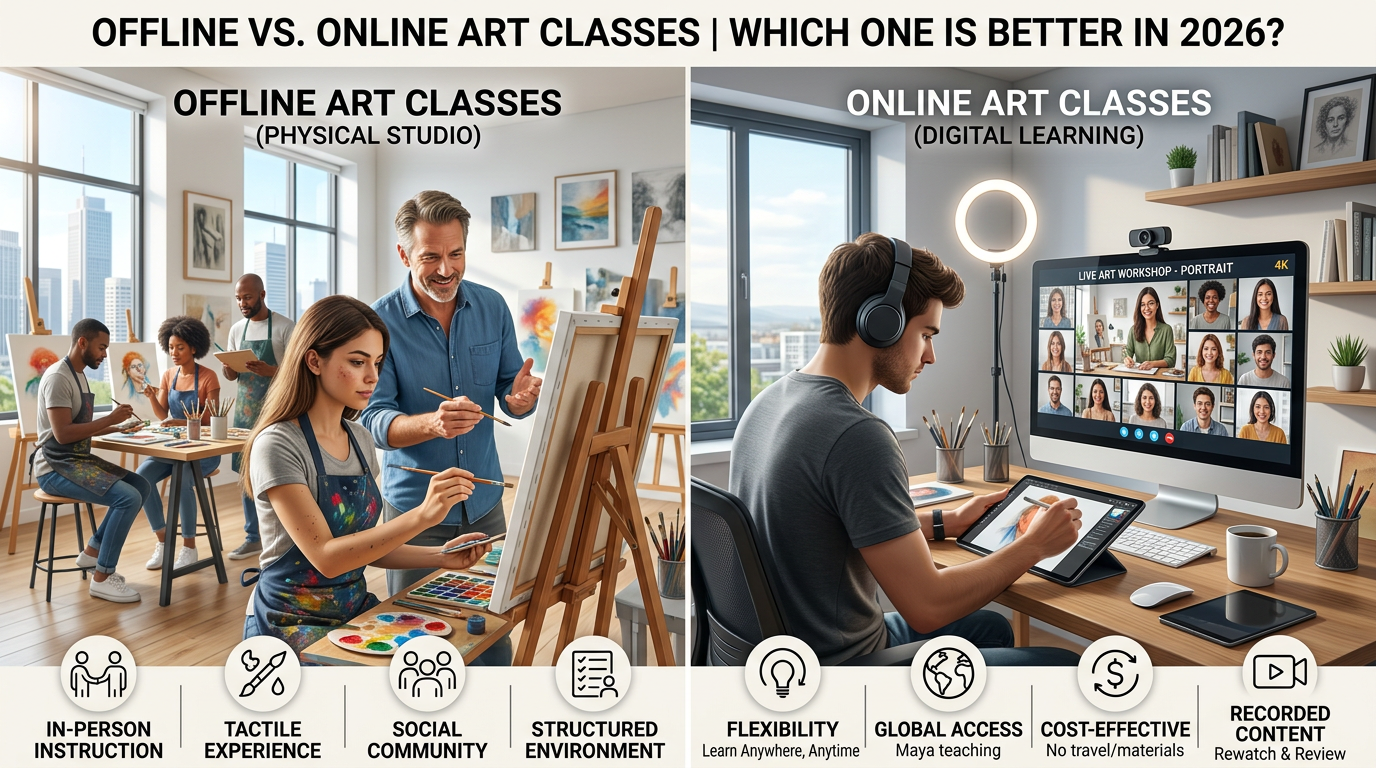
- Direct teacher guidance — instant correction and demonstration
- Hands-on learning experience with real materials
- Better focus and discipline in structured environments
- Social interaction with peers and collaborative learning
Studies show many learners still prefer offline education because it improves motivation and classroom engagement. Around 73.6% of learners consider offline learning more effective due to interactive environments and focus benefits.
For beginners, especially children, physical classrooms help develop observation skills and artistic confidence faster.
What are Online Art Classes?
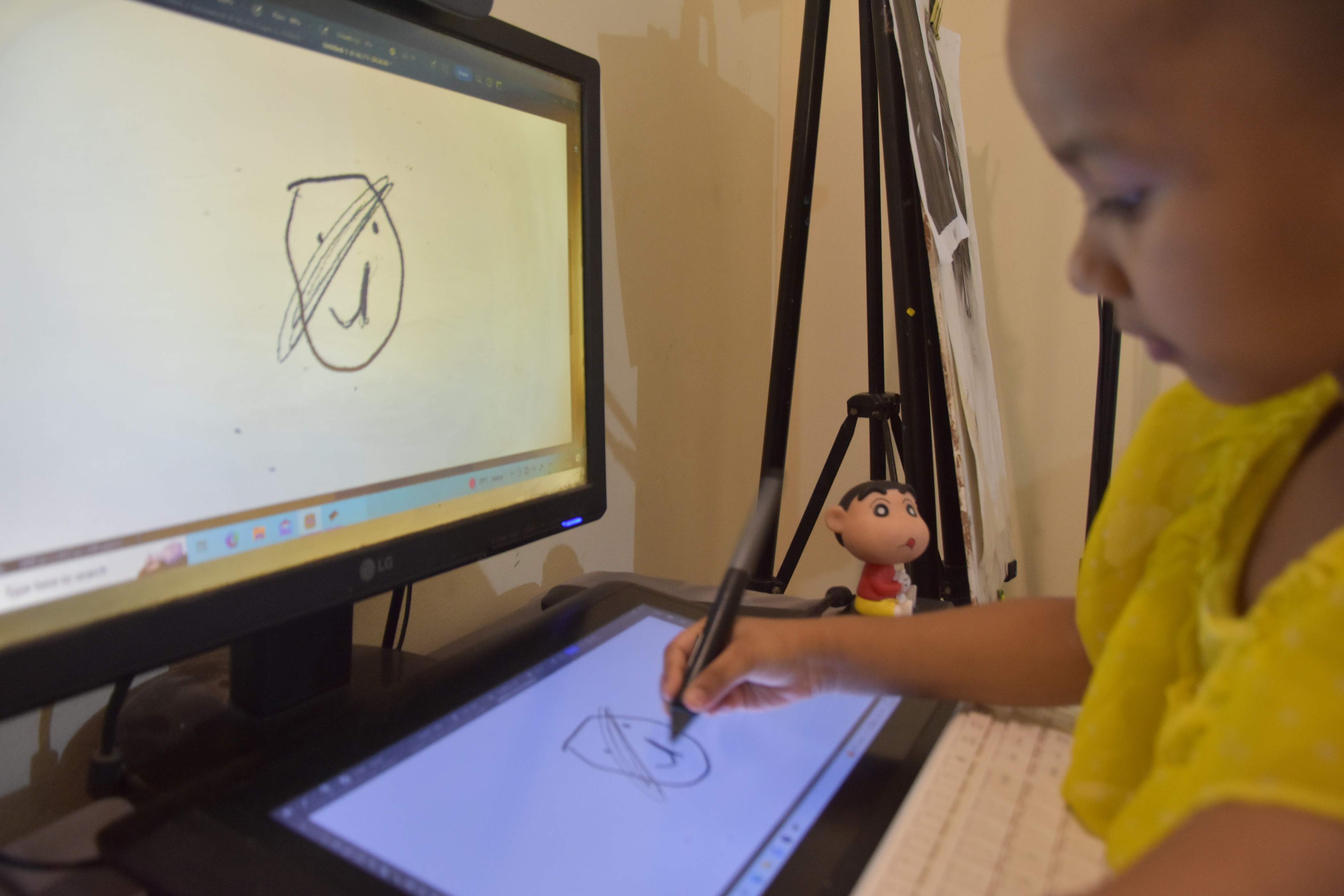
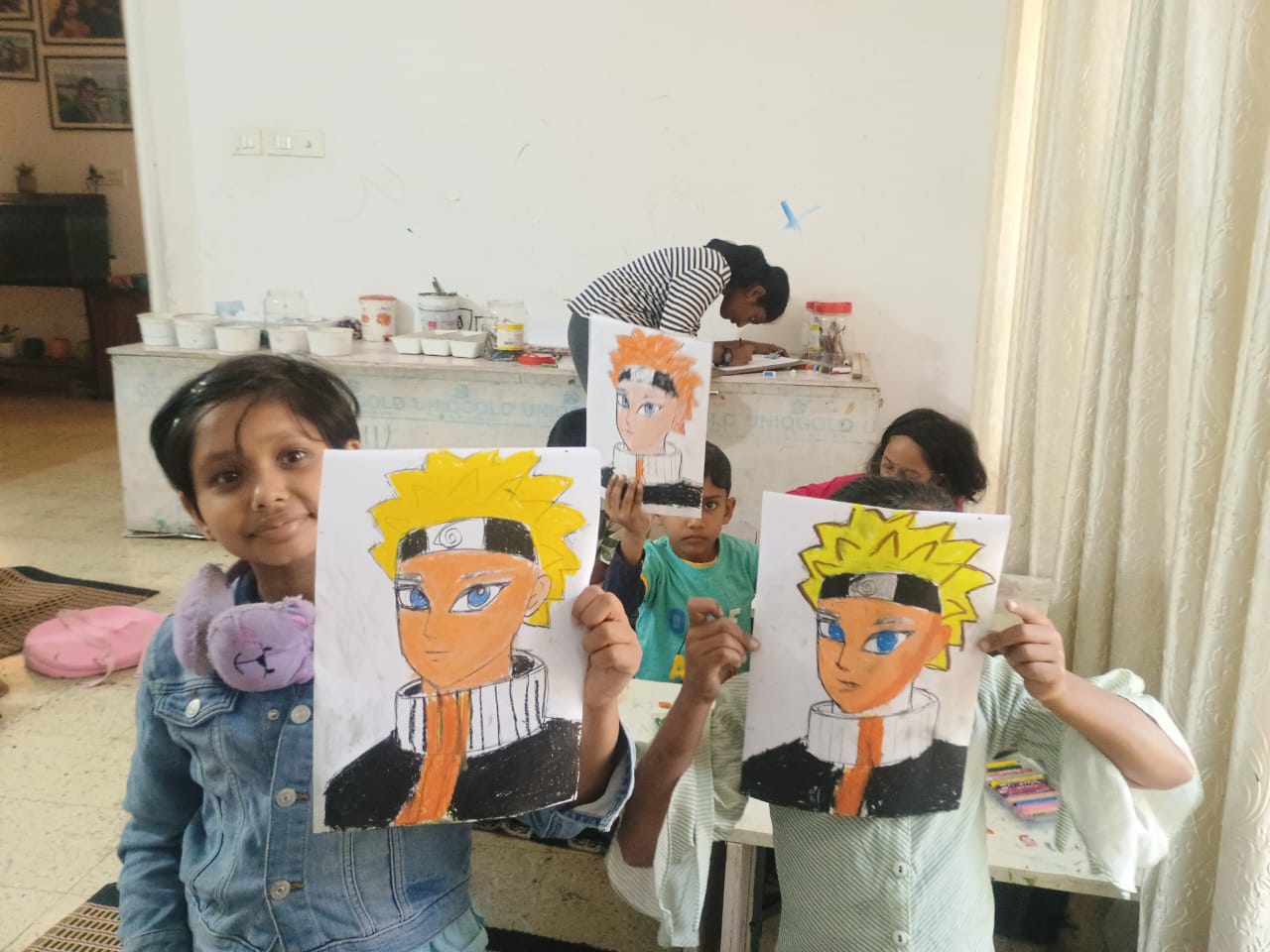
Online art classes allow students to learn from home through live sessions, recorded lessons, or hybrid learning platforms.
Advantages of Online Art Classes
- Learn from anywhere — no travel required
- Flexible schedules for busy students
- Access to teachers worldwide
- Cost-effective learning without commuting expenses
Online education also improves digital literacy and adaptability to modern technology-based learning environments.
For many families in 2026, online learning provides convenience without sacrificing quality instruction.
Learning Experience: Online vs Offline
- Educational research shows both systems support learning differently:
- Offline learning excels in social development and hands-on practice.
- Online learning provides flexibility, accessibility, and personalized pacing.
- Art education especially benefits from a combination of visual demonstration and personal interaction.
- That is why modern education is moving toward blended learning models rather than choosing only one system.
Which Mode Is Better for Children?
Offline Classes Work Best For:
- young beginners
- shy or distracted learners
- students needing discipline and routine
- children who enjoy group environments
Online Classes Work Best For:
- busy schedules
- long travel distance
- advanced learners
- students comfortable with technology
Neither method is universally better — the right choice depends on the learner.
The 2026 Trend: Hybrid Art Education
Across schools and institutions, education is becoming increasingly technology-supported while maintaining real classroom interaction. Smart classrooms and digital learning tools are expanding worldwide, combining creativity with technology.
The future is not online vs offline.
The future is Online + Offline together.
How Ankona School of Art Approaches Learning
At Ankona School of Art, we believe creativity grows best through flexibility.
Our programs offer:
- structured offline studio learning
- interactive online classes
- step-by-step artistic development
- personalized guidance for every student
Students receive the benefits of both worlds — convenience and real artistic mentorship.
Final Thought for Parents
- Choosing between online and offline art classes should focus on one question:
- Where will your child learn most comfortably and confidently?
- When learning matches a child’s lifestyle and personality, creativity naturally flourishes.
Ankona School of Art
Online & Offline Drawing and Painting Programs
Admissions Open — Book a Demo Class Today