In today’s fast-moving digital world, children are surrounded by screens—mobile phones, tablets, TVs, and constant digital stimulation. Many parents ask an important question:
“Is learning art really important for my child?”
The answer, supported by child development research and years of teaching experience, is a clear yes.
Art is not just about drawing or painting. When children learn art at a young age, it shapes how they think, feel, observe, and express themselves. This blog explains the real benefits of learning art for kids, beyond marks and grades.
________________________________________
Why Art Is Important for Children in Early Years
Childhood is the most critical stage for brain development. During this time, children learn best through hands-on, creative activities, not passive screen time.
Art helps children:
• Explore ideas freely
• Learn through trial and error
• Express emotions they can’t yet put into words
That’s why art is considered a core developmental activity, not just a hobby.
________________________________________
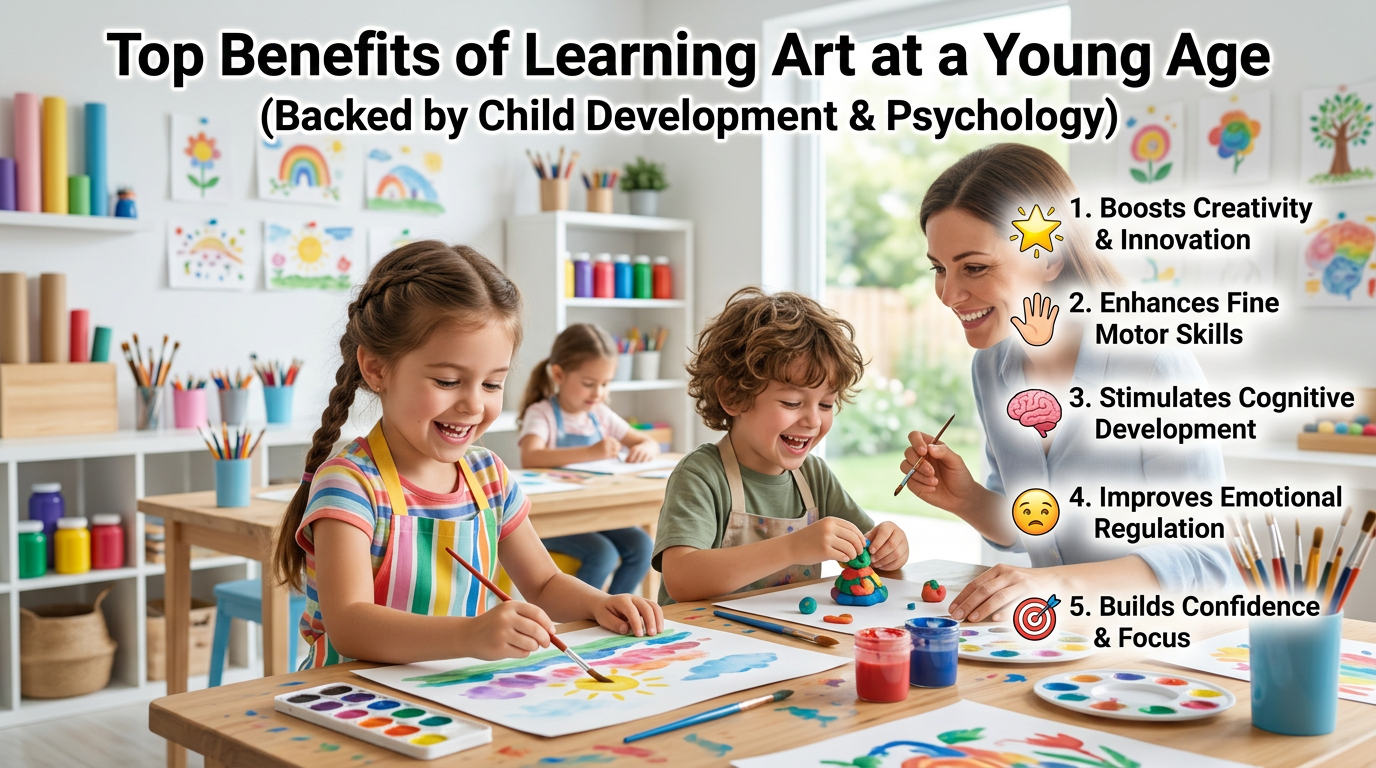
1. Art Improves Brain Development & Thinking Skills
When children draw, color, paint, or model clay, both sides of the brain work together.
Art activities help develop:
• Problem-solving ability
• Decision-making skills
• Visual and spatial intelligence
• Creative thinking
Studies show that children involved in art develop better cognitive flexibility—they learn to think in multiple ways.
________________________________________
2. Builds Strong Concentration & Patience
One of the biggest challenges parents face today is short attention span.
Art naturally trains children to:
• Sit calmly and focus
• Complete a task step by step
• Develop patience without pressure
Even simple drawing activities improve attention span, which directly helps in academics.
________________________________________
3. Enhances Fine Motor Skills & Hand-Eye Coordination
Holding pencils, brushes, crayons, or clay tools strengthens small hand muscles, which are essential for:
• Writing neatly
• Better grip and control
• Faster learning in school
This is especially important for children between 4–9 years, when motor skills are developing rapidly.
________________________________________
4. Boosts Emotional Expression & Confidence
Many children struggle to express emotions verbally. Art gives them a safe emotional outlet.
Through art, children can:
• Express happiness, fear, excitement, or confusion
• Feel proud of their creations
• Build self-esteem without comparison
When a child hears, “This is your artwork, and it’s beautiful,” confidence grows naturally.
________________________________________
5. Reduces Stress & Anxiety in Children
Yes—children experience stress too.
Academic pressure, social expectations, and screen overload can affect mental health. Art helps children:
• Relax their mind
• Release emotional tension
• Feel calm and balanced
Art works like natural therapy for young minds.
________________________________________
6. Encourages Creativity Over Copying
Unlike rote learning, art teaches children that:
• There is no single “right answer”
• Mistakes are part of learning
• Imagination is valuable
This mindset helps children become innovative thinkers, not just followers.
________________________________________
7. Improves Academic Performance Indirectly
Many parents are surprised to learn that art actually helps in academics.
Children who practice art often show:
• Better memory
• Improved observation
• Stronger problem-solving skills
• Increased interest in learning
Art supports subjects like math, science, and language by improving overall learning ability.
________________________________________
8. Develops Discipline & Routine in a Gentle Way
Regular art practice teaches children:
• Time management
• Consistency
• Responsibility for their work
Unlike strict routines, art builds discipline without pressure.
________________________________________
9. Helps Children Discover Their Natural Talents
Early exposure to art helps parents and teachers understand:
• A child’s interests
• Natural creative strengths
• Learning style
Some children may pursue art seriously later, while others benefit from art as a life skill.
________________________________________
What Happens When Children Miss Out on Art?
Children who lack creative outlets may:
• Become overly dependent on screens
• Struggle with expression
• Lose curiosity and imagination
That’s why art should be a regular part of childhood, not an optional activity.
________________________________________
How Ankona School of Art Supports Child Development
At Ankona School of Art, teaching is designed around how children actually learn, not shortcuts.
What Makes Ankona Different:
• 25+ years of teaching experience
• Age-wise structured curriculum
• Focus on fundamentals and creativity
• Encouraging, pressure-free environment
• Online and offline options
Children are guided with care, patience, and personal attention.
________________________________________
Final Thoughts for Parents
Art is not just about creating artists.
It is about creating confident, balanced, expressive human beings.
When children learn art at a young age, they gain skills that support them for life—in school, relationships, and future careers.
________________________________________
Help Your Child Start Learning Art the Right Way
If you’re wondering whether art is right for your child, the best way is to experience it.
- Join a Free Introductory Art Class for Kids
- Get Personal Guidance for Parents
- Explore Age-Wise Art Courses at Ankona School of Art
________________________________________
Ankona School of Art
Building creative minds for a confident future